
The supermarket trip was supposed to take ten minutes.
Then the lights seemed too bright. A trolley squeaked nearby. Someone dropped a bottle. The smell from the bakery mixed with the cleaning aisle. Your child covered their ears, stopped answering, tried to leave, or suddenly began crying or shouting.
From the outside, it can look like refusal or defiance. From your child’s perspective, the environment may simply have become too much.
Sensory differences are part of the diagnostic criteria for autism: autistic people may be unusually sensitive to certain sensory input, unusually under-responsive to it, or strongly interested in particular sensory experiences. These patterns vary considerably from one person to another.
Understanding autism sensory overload does not mean explaining every difficult moment as “sensory.” It means learning to notice when the amount, intensity, unpredictability, or combination of sensory input may be exceeding your child’s ability to stay regulated.
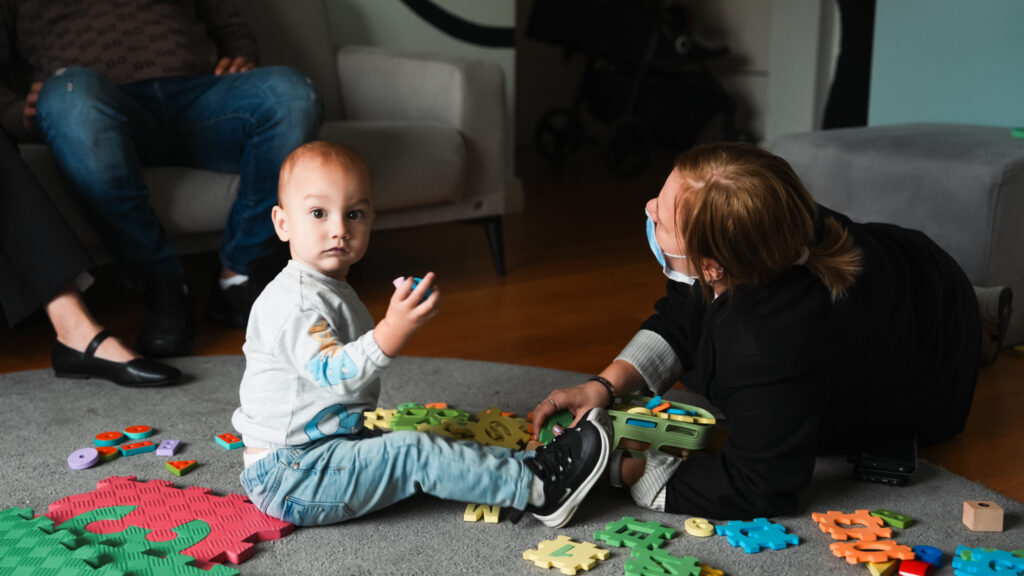
What Is Sensory Overload in Autism?
Quick answer: Sensory overload happens when the amount or intensity of incoming sensory information becomes more than a person can comfortably process or regulate at that moment. An autistic child may respond by escaping, covering their ears, becoming distressed, shutting down, crying, pacing, becoming unusually quiet, or having a meltdown.
The important phrase is at that moment.
A child may tolerate a busy café on Saturday but struggle with the same café after a poor night’s sleep. They may manage school assembly one week and find it unbearable the next. Sensory capacity can change with:
- fatigue
- illness or pain
- hunger
- anxiety
- unfamiliarity
- changes in routine
- communication demands
- cumulative stress from earlier in the day
This is why parents sometimes feel that sensory reactions are inconsistent. The sensory input may be similar, but the child’s available capacity is not.
Autism Sensory Overload Is About More Than Loud Noise
Sound is one of the most recognizable triggers, but sensory processing involves much more. Auditory sensitivity
Some children are particularly affected by:
- hand dryers
- vacuum cleaners
- school bells
- barking dogs
- babies crying
- multiple people speaking at once
- background music
- traffic
- unexpected alarms
The difficulty may not always be the volume. Repetition, pitch, unpredictability or several competing sounds can matter too.
Visual sensitivity
Possible triggers include:
- fluorescent or flickering lights
- bright sunlight
- crowded shelves
- visually busy classrooms
- fast-moving screens
- crowded public spaces
A child who seems distracted in a supermarket may be trying to process hundreds of competing visual details.
Tactile sensitivity
Touch-related difficulties may involve:
- clothing seams or labels
- socks
- certain fabrics
- haircuts
- nail cutting
- toothbrushing
- water on the face
- unexpected touch from another person
- crowded spaces where people brush against them
These reactions are not necessarily about being “fussy.” The same physical sensation can feel much more intense to one nervous system than another.
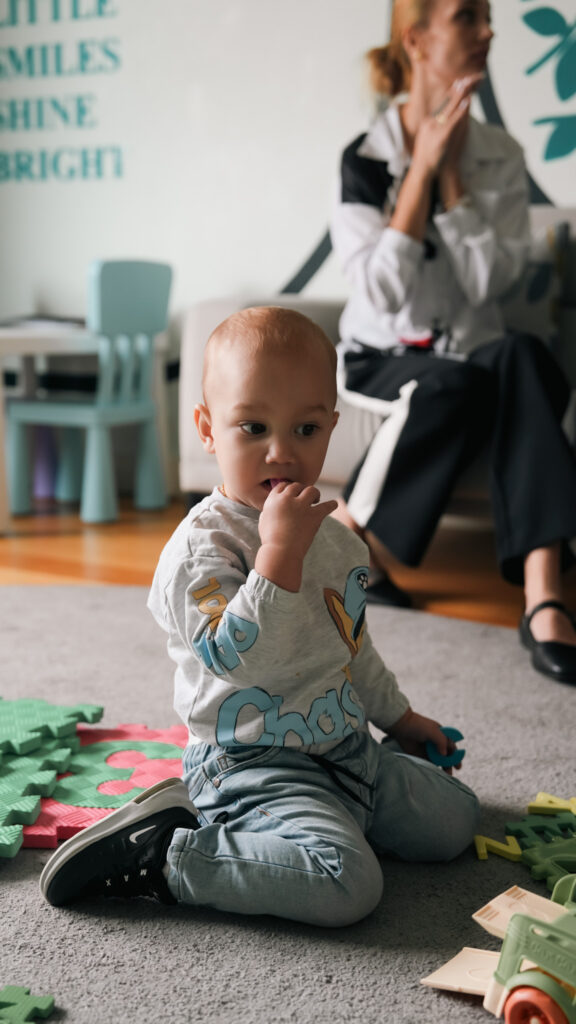
Smell and taste
Strong perfume, cleaning products, cooking smells, school cafeterias or the smell and texture of unfamiliar food may all contribute.
Food selectivity can have several causes and should not automatically be labelled a sensory issue, but sensory characteristics such as texture, temperature, smell and consistency can be important for some autistic children.
Interoception: signals from inside the body
Interoception refers to awareness of internal bodily signals, such as:
- hunger
- thirst
- needing the toilet
- body temperature
- pain
- heartbeat
- fatigue
Some autistic people report difficulty recognizing or interpreting these signals. That can make regulation harder because a child may reach an intense level of hunger, discomfort or urgency before adults realize something is wrong.
Movement and body-position senses
The vestibular system relates to movement and balance, while proprioception provides information about where the body is in space.
Some children strongly seek movement, pressure, jumping or spinning. Others are uncomfortable with particular kinds of movement. Sensory seeking and sensory avoidance can exist in the same child.
Hyper-Sensitivity and Hypo-Sensitivity Can Coexist
Sensory differences are not simply a matter of being “too sensitive.”
An autistic child may be hyper-responsive to one sensation and hypo-responsive to another. For example, a child might cover their ears when a hand dryer starts but constantly seek jumping, crashing or deep-pressure activities.
They may even respond differently to the same sensory system depending on the context.
This is one reason a single generic “sensory diet” or list of autism sensory activities should not be treated as universally appropriate. Sensory needs are individual, and research on sensory interventions varies considerably depending on the strategy, goal and study design.
Sensory Overload vs Ordinary Dislike
Not liking something is not automatically sensory overload.
A child can dislike a noisy restaurant, refuse an uncomfortable jumper or simply prefer to stay home without being overloaded.
Look at the intensity, pattern and loss of capacity.
During ordinary dislike, a child may still be able to:
- negotiate
- complain while staying engaged
- consider alternatives
- continue communicating relatively normally
- recover quickly once a decision is made
During overload, you may notice that abilities temporarily become less accessible. The child may:
- stop responding to questions
- use fewer words
- repeat the same phrase
- cover their ears or eyes
- urgently try to escape
- become increasingly restless
- cry or scream
- freeze
- hide
- push away interaction
- have a meltdown or shutdown
This distinction will not always be obvious, especially in younger children or children who cannot easily describe what they are experiencing.
Subtle Signs That Overload May Be Building
Sensory overload does not always begin dramatically.
Earlier signs may include:
- increased pacing or repetitive movement
- more intense stimming
- becoming unusually quiet
- repeatedly asking to leave
- pressing hands over the ears
- squinting or looking downward
- hiding under furniture or clothing
- becoming less responsive
- difficulty following instructions they usually understand
- sudden irritability
- clinging closely to a parent
- faster breathing
- repeating a familiar question or phrase
- trying to control small details of the environment
These behaviors should be interpreted in context. A change in behavior can also reflect pain, illness, anxiety, sleep problems, communication frustration or other medical and developmental factors. NICE guidance specifically recommends considering environmental factors, communication needs, physical problems and mental health when trying to understand behavior that becomes challenging.
Why Everyday Places Can Become Overwhelming Supermarkets
Think about everything happening simultaneously: fluorescent lighting, refrigerator motors, trolley wheels, music, people talking, announcements, food smells, queues and unpredictable movement.
A child may cope with each input individually but struggle when they arrive together. School
Classrooms can combine:
- many conversations
- chairs scraping
- bells
- bright displays
- crowded corridors
- transitions
- academic demands
- social interpretation
- the expectation to sit still and respond quickly
A child who remains regulated throughout school may then become distressed shortly after getting home. That does not necessarily mean home caused the problem. It may reflect accumulated demands.
Hairdressers and bathrooms
Haircuts can involve buzzing clippers, hair touching the neck, unfamiliar smells, a cape around the body and another person touching the head.
Bathrooms may involve echoes, flushing toilets, strong smells and extremely loud hand dryers.
Travel
Airports, aeroplanes and public transport add sensory input to unpredictability, waiting and changes in routine.
Medical or dental appointments
Bright lights, unfamiliar equipment, touch, smells, waiting and uncertainty can combine quickly. Preparing the child for what will happen can sometimes reduce one layer of unpredictability even when the sensory environment cannot be fully changed.
What Happens During Sensory Overload?
When a child is becoming overloaded, this is usually not the moment for lengthy explanations or repeated questions.
The child may temporarily have less capacity to process:
- spoken language
- choices
- social demands
- instructions
- emotional reasoning
Trying harder to make them “listen” can therefore add another layer of input.
If overload progresses into a meltdown, the priority becomes safety and reducing demands rather than teaching a lesson in that moment. Autism organizations and clinical guidance commonly recommend reducing sensory input and allowing recovery before attempting discussion.
What to Do During Sensory Overload
There is no single strategy that works for every child, but a useful starting principle is: Make the environment simpler before asking the child to do more. Reduce sensory input where possible
You might:
- step outside the shop
- move to a quieter room
- turn off unnecessary lights
- reduce background television or music
- move away from crowds
- offer familiar headphones if the child already finds them helpful
Use fewer words
Instead of:
“What’s wrong? Why are you doing this? Tell me what’s bothering you. Do you want to go outside or sit down?”
Try something shorter:
“Too much. We’re going somewhere quiet.”
A child who usually speaks fluently may temporarily need simpler communication too.
Reduce demands
If something does not need to happen immediately, consider postponing it.
Overload is generally not the best time to practise tolerance, insist on eye contact or complete a non-essential task.
Respect the child’s known regulation strategies
Some children regulate through:
- rocking
- pacing
- repetitive movement
- squeezing a familiar object
- deep pressure they actively seek
- silence
- hiding
- being alone nearby
Do not automatically stop harmless stimming simply because it becomes more visible during distress.
Be careful with touch
A hug may calm one child and intensify overload for another.
Do not assume physical contact is soothing. Follow what you know about your child’s preferences, and whenever possible allow them to indicate whether they want contact.
What Not to Do
During clear overload, avoid turning the moment into a confrontation.
That can mean avoiding:
- repeated questioning
- shouting over the child
- forcing eye contact
- demanding an immediate apology
- threatening punishment for distress behavior
- introducing several new coping techniques at once
- touching the child unexpectedly
- discussing consequences before they have recovered
Safety still matters. Dangerous behavior cannot simply be ignored, but the immediate response should focus on keeping everyone safe while reducing unnecessary stimulation and demands.
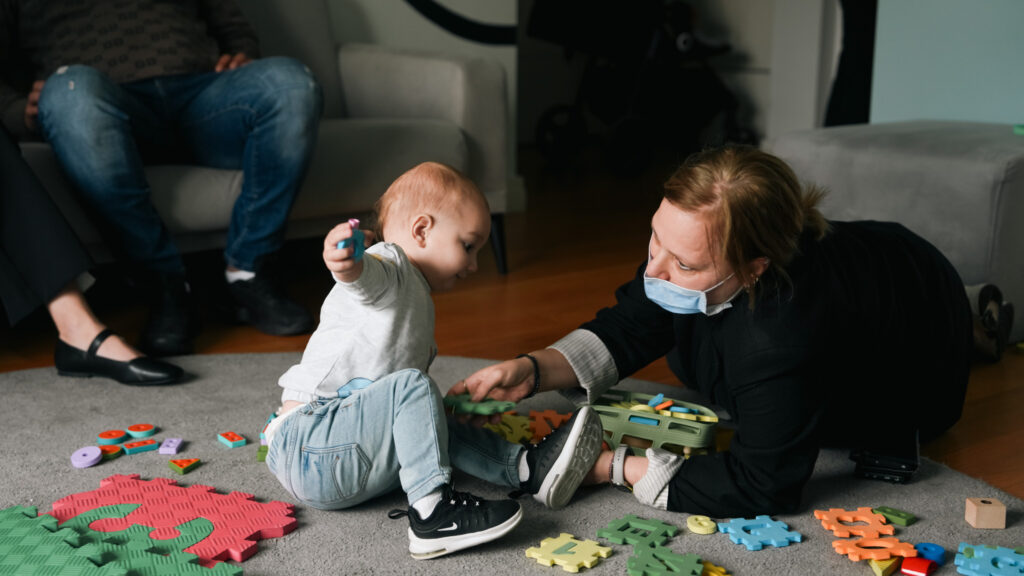
Prevention: Become a Sensory Detective
The goal is not to remove every challenging sensory experience from your child’s life.
The goal is to understand which experiences are unnecessarily overwhelming, which accommodations help, and which skills can be gradually developed without repeatedly pushing the child past capacity.
For a week or two, note:
- Where did overload happen?
- What happened in the 30–60 minutes beforehand?
- What sensory input was present?
- Was the child tired, hungry, anxious or unwell?
- What were the earliest signs?
- What helped?
- How long did recovery take?
Patterns are often more useful than isolated episodes.
Make Environments More Predictable
Depending on the child’s needs, practical changes might include:
- visiting shops at quieter times
- warning before a loud appliance starts
- carrying familiar headphones
- choosing softer or tag-free clothing
- creating a lower-stimulation space at home
- allowing movement breaks
- showing photographs before an unfamiliar appointment
- telling the child how long an activity will last
- giving advance notice of transitions
These are accommodations, not evidence that a child should avoid ordinary life indefinitely. The most useful support usually balances access, participation and regulation.
When Professional Support May Help
Consider discussing sensory difficulties with an appropriately qualified professional if they are:
- preventing school attendance or participation
- making eating, dressing, hygiene or sleep very difficult
- contributing to frequent severe distress
- creating safety risks
- suddenly much worse than usual
- accompanied by signs of pain or illness
- difficult to distinguish from anxiety, communication difficulty or another condition
An occupational therapist may assess how sensory differences affect daily functioning and help identify individualized environmental or participation strategies. Evidence for sensory-based approaches is mixed and depends heavily on what intervention is actually being studied, so goals should be specific and functional rather than based on broad promises.
Most importantly, a new or major behavioral change should not automatically be attributed to autism or sensory processing. Pain, gastrointestinal problems, dental problems, sleep disturbance, anxiety and other medical issues may all deserve consideration.
What does sensory overload look like in an autistic child?
It can look like covering the ears, escaping, crying, shouting, pacing, becoming less verbal, hiding, freezing, shutting down or having a meltdown. Some children show quieter warning signs long before obvious distress.
Can an autistic child suddenly become more sensitive to noise?
Yes, apparent tolerance can vary with fatigue, stress, illness, anxiety and the amount of sensory input already experienced that day. A significant or persistent new change should also prompt consideration of medical causes, including ear pain or hearing problems.
Is sensory overload the same as a meltdown?
No. Sensory overload describes a state in which input has become difficult to process or regulate. A meltdown can be one possible response to overload, but meltdowns can also involve emotional stress, uncertainty, communication demands, pain or combinations of factors.
Should I make my child stay in a noisy place so they get used to it?
Repeatedly overwhelming a child is not the same as building tolerance. If participation in a difficult environment is important, it is generally better to identify the specific difficulty, use appropriate accommodations and build skills gradually with professional guidance when needed.
Do noise-cancelling headphones help autistic children?
Some autistic children find headphones or ear defenders useful in specific environments. They are not necessary or helpful for everyone, and their use should be guided by the child’s comfort and real-world functioning rather than treated as a universal autism intervention.
Can sensory issues get better with age?
Sensory experiences can change over time, and children can develop better communication, preparation and coping strategies. However, sensory differences may also continue into adolescence and adulthood. The aim is not necessarily to eliminate them, but to improve comfort, participation and self-understanding.
When should I seek medical advice rather than assuming it is sensory?
Seek professional assessment when there is a sudden or unexplained change, possible pain or illness, loss of skills, major sleep or eating changes, injury risk, or distress that significantly interferes with everyday life.
Sources & Further Reading
1. Clinical Testing and Diagnosis for Autism Spectrum Disorder — Centers for Disease Control and Prevention (CDC), current clinical guidance.
https://www.cdc.gov/autism/hcp/diagnosis/index.html
2. Sensory Processing — National Autistic Society.
Internalising/Externalising Problems in Autism: Systematic Review and Meta-analysis — Clinical Psychology Review, 2024.
https://pmc.ncbi.nlm.nih.gov/articles/PMC12658592
5. Autism Spectrum Disorder in Under 19s: Support and Management — NICE Clinical Guideline CG170.
https://www.nice.org.uk/guidance/cg170/chapter/Recommendations
Suggested Internal Links
1. sensory-friendly daily routines for autistic children →
2. creating an autism-friendly space at home →
3. sensory overload and travel →
4. autism and sleep difficulties →