

If you have spent any time researching regenerative medicine for autism, you have almost certainly run into two words used side by side, often as if they were rivals: stem cells and exosomes.
Which one is “better”? Which one is newer? Which one is right for your child?
The honest starting point is that these are not really two competing products. They are two closely related parts of the same biological story — and understanding how they connect will make every other conversation you have on this subject clearer. Let us explain it in plain language.

What are stem cells?
Stem cells are the body’s most versatile cells. Unlike a skin cell or a liver cell, which has one fixed job, a stem cell is comparatively unspecialised — and in regenerative medicine, the type most often discussed is the mesenchymal stem cell (MSC).
For a long time, the assumption was that these cells help mainly by travelling to a site and turning into new tissue. But research over the past two decades has shifted that picture. Scientists increasingly believe much of what MSCs do is not about the cells becoming something else at all — it is about the signals they send to the cells around them.
And that is exactly where exosomes come in.
What are exosomes?
Exosomes are tiny packages — extracellular vesicles — that cells, including stem cells, release to communicate with one another.
Picture a stem cell as a factory. The exosomes are the parcels it ships out: microscopic bubbles carrying proteins, lipids and genetic messengers (like microRNA) from one cell to another. When a nearby cell receives one of these parcels, the instructions inside can influence how it behaves.
In other words, exosomes are one of the main ways stem cells talk. A large part of a stem cell’s signalling effect is now thought to be carried by its secretome — the mixture of factors it secretes, exosomes prominent among them.
This is why the “stem cells versus exosomes” framing is a little misleading. Exosomes are not an alternative to stem cells so much as a product of them.
The key difference: cell-based vs cell-free
If there is one distinction worth holding on to, it is this.
Stem cell approaches are cell-based — they involve living cells.
Exosome approaches are cell-free — they use the signalling packages the cells produce, without the living cells themselves.
That single difference drives most of the others.
| Stem cells | Exosomes | |
| What it is | Living, versatile cells (often MSCs) | Tiny vesicles released by cells |
| Category | Cell-based | Cell-free |
| Main proposed role | Sending signals, supporting the local environment | Carrying those signals as “messengers” |
| Relationship | Produces exosomes | Produced by stem cells |
| Size | A whole cell | Far smaller — nanoscale particles |
So which one is “better” for autism?
Here is the part that matters most, said plainly: no honest source can tell you that one is universally better, and anyone who does should make you cautious.
Research into both stem cell and exosome approaches for autism is still developing. Much of it is early, and autism itself is not one single thing — it is a wide spectrum of very different children with very different profiles. A question framed as “which therapy is best?” almost always has the wrong shape. The better question is “what, if anything, is appropriate for this child?”
That is not an answer a blog can give. It is a medical judgement, and it can only be made after a real, individual review of the child.
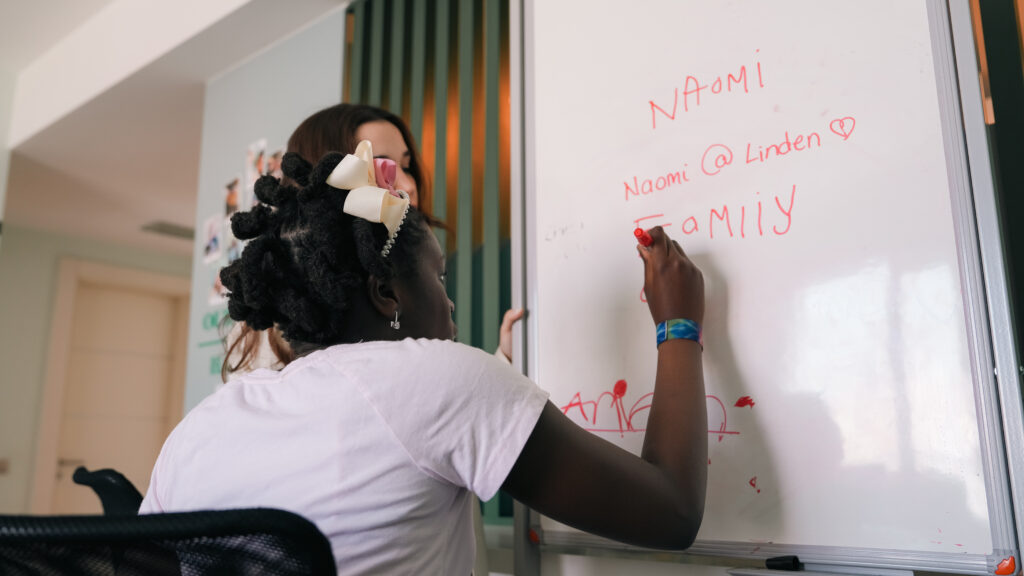
Why individual review is the real answer
Two children with the same diagnosis can have completely different underlying pictures — different medical histories, different co-occurring conditions, different needs. What might be considered for one is not automatically right for another. This is exactly why a responsible program does not lead with a product. It leads with an assessment.
At Linden Health, supportive stem cell and regenerative medicine care is offered only as one part of a personalized, medically supervised plan — and always alongside, never instead of, the therapies your child already receives. Before anything is recommended, our medical team reviews your child’s age, diagnosis, medical history, current therapies, sensory profile, nutrition, and your family’s goals. What is appropriate, if anything, is decided from there — not from a label.
Families who have followed our support plan have described changes in areas such as communication, focus, sensory comfort and everyday development. Every child is different, and experiences differ between families.
Not every child is a candidate. Medical eligibility review comes first.
→ Check My Child’s Eligibility
Linden Health is a private international medical program based in İstanbul, Türkiye, supporting more than 2,000 families from 45+ countries across 18+ years.
Regenerative medicine for autism, including stem cell and exosome-based approaches, is an area of ongoing research and is considered only after individual medical review, as part of a personalized, medically supervised plan. This article is general educational information, not medical advice, and does not describe guaranteed outcomes — outcomes differ between children. Speak with a qualified professional about your child. Your treatments will be conducted at healthcare facilities with a healthcare tourism authorization certificate.
FAQ Section (add to page — FAQPage schema)
What is the difference between exosomes and stem cells? Stem cells are living, versatile cells. Exosomes are tiny packages that cells — including stem cells — release to send signals to other cells. Stem cell approaches are cell-based; exosome approaches are cell-free.
Are exosomes made from stem cells? Exosomes are released by many cell types, including stem cells. A large part of a stem cell’s signalling effect is thought to be carried by the exosomes and other factors it secretes.
What does “cell-free therapy” mean? It refers to using the signalling packages that cells produce — such as exosomes — rather than the living cells themselves.
Is exosome therapy better than stem cell therapy for autism? No honest source can claim one is universally better. Research into both is still developing, and autism is a wide spectrum. What may be appropriate depends on the individual child and is a medical judgement, not a general rule.
Is regenerative medicine for autism proven? It is an area of ongoing research rather than an established, guaranteed treatment. Any consideration of it should follow an individual medical review and sit alongside a child’s existing therapies.
How do I know what’s right for my child? The only reliable way is an individual medical review of your child’s history, diagnosis, current therapies and needs. A responsible program assesses the child first, rather than recommending a product in advance.