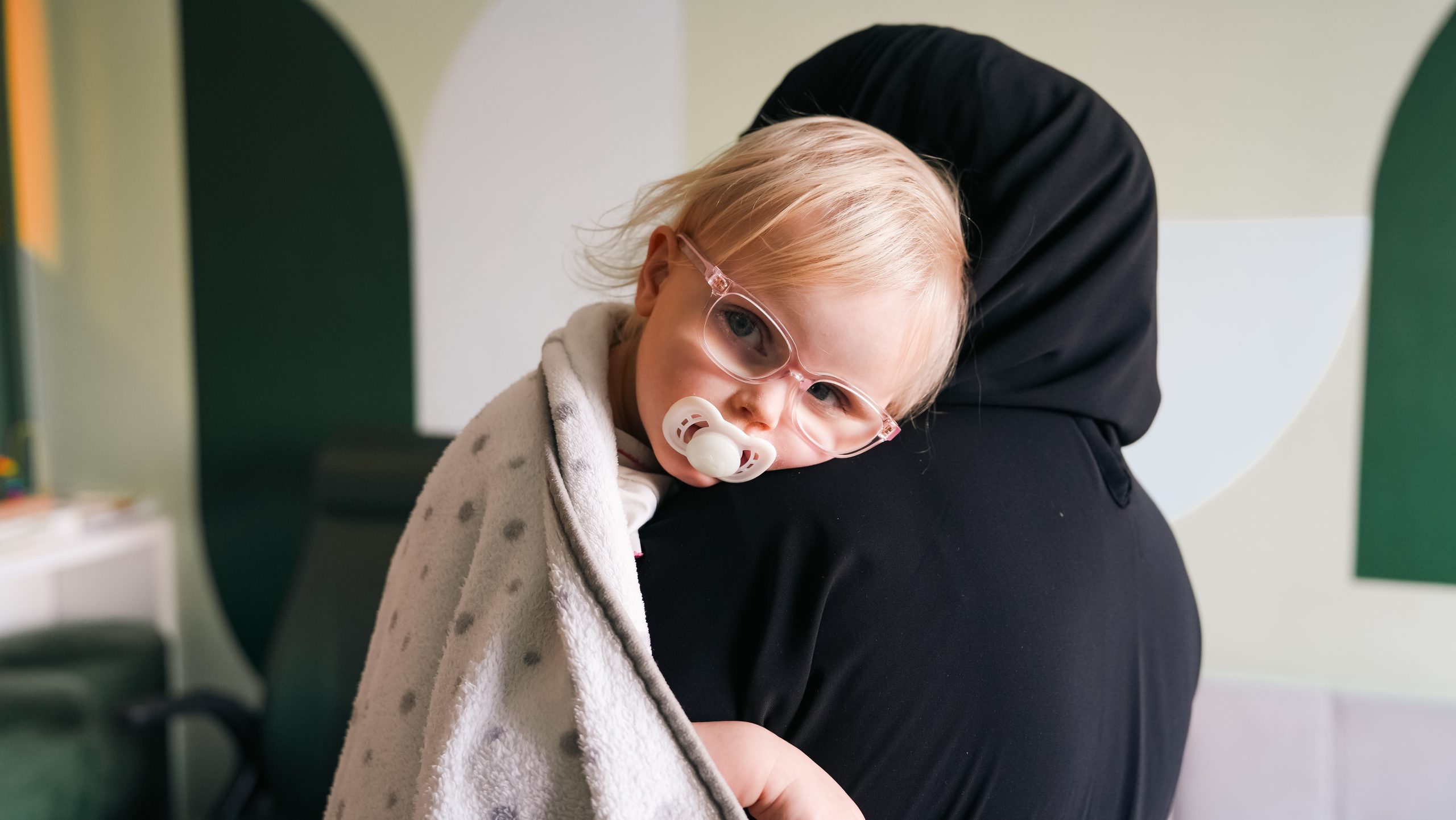

A Little Girl Who Is Discovering a Bigger World
“She has toys she never touched for years.”
For one mother, watching her daughter finally reach for those forgotten toys became one of the most meaningful moments in her journey.
Today, Leila builds towers with LEGO bricks, explores books, rides her bicycle, and fills the house with laughter. She is beginning to experiment with new sounds, show affection more openly, and participate in everyday family life in ways that once seemed difficult.
But her story did not begin this way.
Before visiting Linden for stem cell therapy, everyday life was shaped by communication difficulties, sensory sensitivities, emotional distress, and a strong need for familiar routines.
To protect her privacy, we will refer to her as Leila, a pseudonym used throughout this story.
This is her family’s story of the changes they observed over several months following treatment, alongside continued developmental therapies and family support.
Before Treatment: When Everyday Experiences Felt Overwhelming
Before her visit to Linden, Leila was nonverbal and rarely responded when someone called her name.
She showed little interest in playing with toys or interacting with other children. She often preferred being alone, and making eye contact was uncommon.
Even familiar daily activities could become challenging.
Unexpected changes were particularly difficult for Leila. New places made her anxious, while loud sounds could overwhelm her. She was highly active, struggled with sleep, and relied heavily on familiar routines.
Cartoons were a major fixation, while toys and imaginative play held little interest.
Her mother was also managing difficult behaviors, including screaming, aggression, head banging, pinching, and other self-injurious actions.
Beyond these challenges, Leila experienced constipation, had a limited range of preferred foods, and continued to need diapers.
Traveling together was especially demanding because of her hyperactivity and difficulty settling.
Her family wanted to see her become more comfortable in everyday situations, communicate her needs, and participate more fully in the world around her.
The First Changes: A Calmer Journey Home
Leila’s mother reported noticing a difference in her calmness shortly after the procedure.
One of the first meaningful experiences came during the family’s journey home.
Travel had previously been extremely challenging. This time, Leila remained awake during the trip but was easier to settle and manage.
Over the following weeks, other changes began to emerge.
At school, Leila started responding when teachers called her name. At home, this response was not yet consistent, but her mother was encouraged to see her becoming more aware of people speaking to her.
She also began following directions more readily.
Activities that previously struggled to hold her attention became easier to complete, and her mother noticed that she was more focused.
Her eye contact became clearer and more frequent.
Meanwhile, everyday life began to feel more manageable.
Her screaming decreased, aggression became milder, and repetitive movements were less frequent. Some previously challenging behaviors, including repeatedly stepping on others’ feet, stopped during this early period.
Her digestive routine also improved, with her mother reporting regular bowel movements and relief from constipation.
Leila became more willing to try different foods and showed growing interest in doing things independently.
A New Interest in People, Play, and Family Life
As the months passed, Leila’s mother began describing changes that went beyond calmer behavior.
Previously, Leila had often preferred isolation.
Now, she wants to be around other people.
She started approaching family members more frequently and became especially affectionate toward her younger sister, moving closer and offering hugs.
Visitors who once frightened her became easier to tolerate.
Her mother also noticed something new: Leila was beginning to imitate her.
She watched her mother getting ready and copied her movements, even pretending to apply makeup.
For a child who had previously shown limited interest in imitation or pretend play, these were particularly memorable moments.
Leila also began exploring her toys.
Rather than leaving them untouched, she started interacting with them and experimenting with different ways to play.
Her mother described her as more present, curious, and interested in discovering what was happening around her.
These observations reflected a gradual change in her everyday participation, rather than one sudden transformation.
Football: A New Way to Share Family Moments
Sometimes, connection begins with something as simple as watching a football match together.
Before her treatment, Leila had shown limited interest in social interaction and often preferred spending time alone. Joining family activities was not always easy, and much of her attention was focused on familiar cartoons and repetitive routines.
Over time, her mother began noticing a different side of her.
Leila developed an interest in football. She became visibly excited during matches, showing enthusiasm for something beyond her previously preferred activities.
For her family, this was especially meaningful because football offered another opportunity for shared enjoyment.
It wasn’t about understanding the rules of the game or following every moment of a match. It was about discovering an interest that could become part of family life.
As Leila became more interested in being around others, football represented one more way she could participate in experiences that brought the family together.
Sometimes, family connections don’t need words. It can begin with a shared interest, a moment of excitement, or simply enjoying the same experience together.
Finding Her Voice, One Sound at a Time
Speech development remained one of Leila’s family’s biggest hopes.
Before treatment, she was nonverbal.
During follow-up conversations, her mother began reporting new vocalizations.
Leila started babbling with different tones, sometimes producing long sequences of sounds that reminded her mother of a conversation.
She laughed more frequently and experimented with different sounds.
Later, her mother noticed Leila attempting to say “mama.”
The word was not yet being used consistently or meaningfully to address her mother, but Leila was beginning to practice its sounds.
She also produced clearer syllable combinations, including sounds resembling “rarara” and “nanana.”
These were early vocal changes rather than established spoken language.
At the same time, her understanding of verbal communication appeared to be developing.
Leila began processing simple instructions more quickly and following them more consistently.
Her mother increasingly relied on spoken directions rather than gestures.
Leila also started recognizing familiar routines and responding to everyday requests, such as bringing shoes or helping with plates.
For her family, communication progress was not measured only by words.
It was also visible in the way Leila understood what was happening around her and participated in daily activities.
When Sensory Experiences Became Easier
Sensory sensitivity had once influenced many parts of Leila’s life.
Loud sounds, unfamiliar environments, and bright sunlight could be particularly difficult.
During follow-up, her mother reported that Leila became much more comfortable with everyday sounds.
Her sensory-seeking behaviors also became less frequent and were eventually no longer being observed by the family.
Sunlight remained a challenge for longer.
Previously, Leila would cover her eyes or hide behind her mother when exposed to bright light.
Over time, her mother noticed that she no longer reacted in the same way.
By the later follow-up, Leila was tolerating sunlight without hiding or covering her eyes.
Her response to changes in routine also became more flexible.
Instead of becoming immediately distressed when something unexpected happened, she could sometimes pause, observe, and accept the situation.
This growing flexibility made ordinary family activities easier to navigate.
Some anxiety in unfamiliar places continued, particularly when Leila was outside and wanted to remain close to her mother.
Her journey was not without challenges, but her family noticed that situations once associated with significant distress were becoming more manageable.
From Head Banging and Screaming to More Peaceful Days
One of the most significant changes reported by Leila’s mother involved her behavior and emotional expression.
Initially, self-injury, aggression, screaming, and destructive behavior were major concerns.
During the following months, her mother described a gradual reduction in these behaviors.
Head banging stopped.
Pinching became less frequent and later stopped being reported.
Aggressive behaviors were no longer observed during later follow-ups.
Screaming also became increasingly uncommon.
Leila could still become frustrated, particularly when her mother was unable to respond immediately, but the intensity of her reactions had changed.
Her mother also noticed that Leila’s emotions were becoming easier to understand.
She began showing affection through kisses, hugs, and holding her family members close.
When she was happy, her excitement became more visible.
And one of the most touching changes was the sound of her laughter.
Her mother shared:
“Now she laughs loudly and I love her laugh.”
For this family, progress was not simply about fewer difficult moments.
It was also about having more opportunities to enjoy being together.
Discovering Independence Through Everyday Activities
As Leila became more engaged with her surroundings, her mother noticed new signs of independence.
She started feeding herself with a spoon and became more willing to explore different foods.
Her appetite improved, and she began eating larger portions.
At one point, she even tried soup for the first time.
Leila also showed growing interest in her appearance and her body.
She began standing in front of mirrors, experimenting with hairstyles, making facial expressions, and observing herself.
Her mother noticed her clapping and raising her eyebrows—small actions that reflected her growing curiosity and expressiveness.
Books also became interesting to her.
She started opening them and exploring the pages independently.
Later, she began building towers with LEGO bricks and playing with toys that had remained untouched for years.
She also learned to ride a bicycle.
These were meaningful additions to her everyday life.
Small Steps Toward Toilet Independence
Toilet training was another important part of Leila’s development.
Before treatment, she continued to use diapers and experienced constipation.
During the early follow-ups, her mother reported more regular bowel movements and greater success using the bathroom.
Over time, Leila also began having dry days and nights.
Her family continued using a diaper during the day as a precaution, and bowel movements still required additional toilet-training support.
Constipation, which had initially improved, later returned intermittently.
These details were important because they showed that development was continuing, with some areas progressing more consistently than others.
For Leila’s mother, even partial independence in daily routines represented a meaningful change.
School Became a Place for Participation
Leila continued attending school throughout her journey.
Her support program included speech and language therapy, occupational therapy, and ABA-based intervention.
Her mother reported encouraging feedback from teachers.
Leila became more responsive when called by name in the classroom, followed instructions more readily, and participated in matching activities.
She also showed greater focus during structured tasks.
These changes occurred while Leila continued receiving educational and developmental support.
Her school experience remained an important part of her daily routine, providing ongoing opportunities to practice communication, play, attention, and independence.
The Moment Her Mother Realized How Much Had Changed
By the later follow-ups, Leila’s mother was no longer describing only the absence of difficult behaviors.
She was describing a little girl who wanted to be part of family life.
Leila sought affection, laughed openly, played with toys, explored her surroundings, and showed curiosity about everyday activities.
She could enjoy football, build with LEGO bricks, ride her bicycle, and express excitement in her own way.
She had become more comfortable with sounds, more flexible with changes, and more interested in the people around her.
Her mother also noticed that Leila could now show her feelings in ways the family understood more easily.
Perhaps the most meaningful part of the story was not any single milestone.
It was the combination of small changes that made everyday life feel different.
A toy finally picked up.
A hug offered to her sister.
A new sound practiced.
A calmer outing.
A laugh that filled the room.
These moments gave Leila’s family new experiences to share with her.
Understanding Leila’s Progress After Stem Cell Therapy for Autism
Leila’s family reported these changes during the months following her stem cell therapy visit to Linden.
Her journey also included continued speech and language therapy, occupational therapy, behavioral support, school participation, dietary adjustments, and ongoing medical care.
Leila had a history of seizures and remained under medical supervision, including prescribed medication and neurological follow-up.
What Leila’s story offers is a personal account of the changes one family noticed over time.
It also highlights why progress is best understood through everyday abilities, meaningful participation, and ongoing developmental support rather than a single measurement.

Every Child’s Journey Has Its Own Meaning
There is no single way for an autistic child to develop.
For one family, progress might mean hearing a first word.
For another, it may mean sleeping more comfortably, trying a new food, participating in play, or finding a way to communicate frustration without distress.
For Leila’s mother, it meant seeing her daughter become more curious, affectionate, expressive, and involved in family life.
Leila is still developing her communication and independence, and her family continues supporting her needs.
But the little girl who once preferred isolation is now exploring a world of toys, people, sounds, and shared experiences.
And sometimes, the most memorable progress is not something that can be measured.
It is simply hearing your child laugh.
Exploring Individualized Autism Support
At Linden, families can request an eligibility review to learn more about the regenerative medicine approaches and discuss their child’s individual circumstances with the team.
Every child’s developmental profile is different, and therapy decisions should be made through careful medical evaluation while continuing appropriate developmental and educational support.